From Looking at the Stars to Reaching Beyond Earth
For thousands of years, humans have looked up at the night sky with curiosity and wonder.
Ancient civilizations studied the movements of stars, planets, and the Moon. Sailors used the stars for navigation. Astronomers observed celestial objects through increasingly powerful telescopes. Stories, myths, and legends were created around the mysterious lights that filled the heavens.
For most of history, space remained completely beyond human reach.
People could observe it, imagine it, and dream about it, but they could not travel there.
Everything changed during the twentieth century.
Advances in science, engineering, and rocketry made it possible to leave Earth’s atmosphere for the first time. What had once seemed impossible gradually became reality.
The launch of satellites transformed communication and scientific observation. Human beings traveled into orbit. Astronauts walked on the Moon. Space exploration became one of humanity’s greatest technological achievements.
For many decades, space activities were mainly carried out by governments.
National space agencies invested enormous resources into rockets, satellites, scientific missions, and human spaceflight programs. These efforts produced remarkable discoveries and technological innovations that benefited people around the world.
Satellite communications improved global connectivity. Weather satellites enhanced forecasting. Navigation systems transformed transportation. Scientific missions expanded humanity’s understanding of the universe.
However, space exploration remained expensive and accessible only to a small number of countries.
In recent years, a major shift has begun to take place.
Private companies are becoming increasingly involved in space activities. Businesses are developing rockets, launching satellites, building spacecraft, and exploring opportunities that once belonged almost entirely to government agencies.
This movement is known as commercial space exploration.
Instead of viewing space solely as a scientific or governmental endeavor, companies are beginning to see it as an economic frontier with opportunities in transportation, communications, manufacturing, tourism, research, and resource development.
The combination of advanced space technology and private-sector innovation is creating a new chapter in humanity’s relationship with space.
Many experts believe the coming decades may witness some of the most important developments in space exploration since the first Moon landing.
The Technologies That Make Modern Space Exploration Possible
Space exploration depends on some of the most advanced technologies ever developed.
One of the most important is rocketry.
Rockets provide the tremendous force needed to overcome Earth’s gravity and carry payloads into space. Achieving orbit requires vehicles capable of reaching speeds of approximately 28,000 kilometers per hour.
This challenge has driven decades of innovation in propulsion systems, materials science, fuel technology, and engineering design.
Traditional rockets were often used only once.
After completing their missions, major components would fall back to Earth or burn up in the atmosphere. This made space travel extremely expensive because new rockets had to be built for every launch.
Modern reusable rocket systems are changing that model.
Engineers have developed technologies that allow rocket stages to return safely and be used multiple times. Reusability has the potential to reduce launch costs significantly and increase access to space.
Satellites are another essential component of modern space technology.
These spacecraft orbit Earth and perform a wide range of tasks. Communication satellites enable television broadcasts, internet services, and global communications. Navigation satellites support GPS and location-based services. Earth observation satellites monitor weather, agriculture, environmental conditions, and natural disasters.
Scientific satellites study the Sun, distant galaxies, planets, and other celestial objects.
Advances in miniaturization have also transformed the industry.
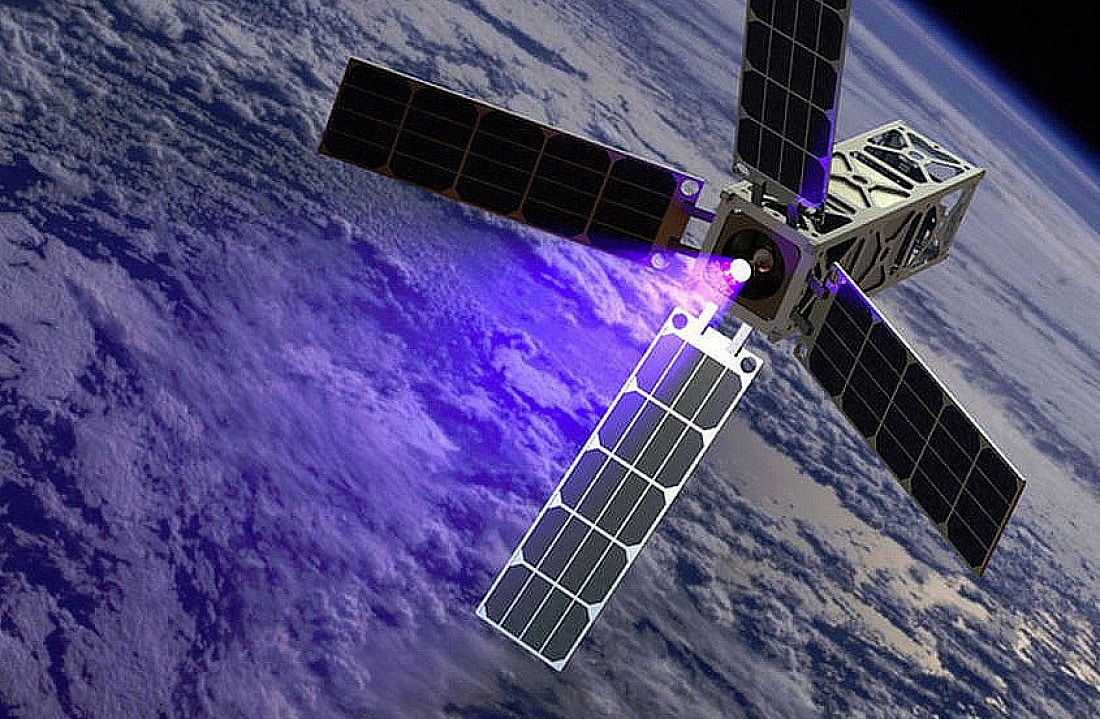
Many modern satellites are far smaller and more affordable than earlier generations. Small satellites and cube satellites allow universities, startups, and smaller organizations to participate in space projects that would once have been impossible.
Artificial Intelligence is increasingly becoming part of space technology as well.
AI systems help analyze massive amounts of data collected by satellites and space missions. They assist with navigation, spacecraft operations, predictive maintenance, and autonomous decision-making.
Robotics plays a critical role too.
Space robots explore environments that are too dangerous or distant for humans. Robotic spacecraft have visited planets, moons, asteroids, and comets throughout the solar system.
Future missions may rely even more heavily on autonomous systems capable of performing complex tasks with minimal human intervention.
Advanced materials, improved sensors, high-speed communications, and powerful computing systems continue to expand what is possible in space exploration.
Together, these technologies are helping transform space from a domain reserved for governments into an increasingly accessible environment for scientific, commercial, and industrial activities.
How Commercial Space Exploration Could Transform Life on Earth
Many people assume that space technology only benefits astronauts and scientists.
In reality, space-related innovations already influence everyday life in countless ways.
Global communication networks depend heavily on satellites.
Television broadcasts, weather forecasting, navigation systems, internet connectivity, emergency communications, and financial networks all rely on space-based infrastructure.
As commercial space activities expand, these services may become even more advanced.
Satellite internet systems are one example.
Large networks of satellites are being deployed to provide internet access in remote regions where traditional infrastructure is difficult or expensive to build. This could help connect millions of people who currently have limited access to online services.
Earth observation is another rapidly growing field.
Modern satellites can monitor forests, oceans, agricultural land, urban development, weather systems, and environmental changes with remarkable precision.
Farmers can use satellite data to improve crop management. Governments can monitor natural disasters more effectively. Scientists can study climate patterns and environmental trends.
Commercial launch services are making access to space more affordable.
Lower launch costs may encourage innovation in telecommunications, research, manufacturing, and scientific exploration.
Space tourism is also beginning to emerge.
Although currently expensive and limited to a small number of participants, private companies are developing systems that may eventually allow more people to experience space travel.
Manufacturing in space presents another intriguing possibility.
Microgravity environments allow certain processes to occur differently than on Earth. Researchers are studying whether future factories in orbit could produce specialized materials, pharmaceuticals, or advanced technologies more efficiently.
The Moon and asteroids may eventually become important destinations as well.
Some scientists believe these bodies contain valuable resources that could support future space missions or industrial activities. Although such projects remain largely experimental today, research continues to explore their feasibility.
Human space exploration may also expand.
Private companies are working alongside government agencies to develop spacecraft capable of transporting astronauts to the Moon, Mars, and other destinations.
Future missions could establish permanent or semi-permanent human presence beyond Earth, creating opportunities for scientific research, resource utilization, and long-term exploration.
What once seemed like science fiction is increasingly becoming a subject of serious planning and investment.
The Challenges, Risks, and Future of Humanity in Space
Despite rapid progress, space exploration remains one of the most difficult and expensive endeavors ever undertaken.
The environment of space is extremely hostile.
Temperatures can vary dramatically. Radiation levels are high. There is no breathable atmosphere. Equipment must operate reliably under conditions that are far more challenging than those found on Earth.
Launch costs, although decreasing, remain substantial.
Building spacecraft, rockets, satellites, and supporting infrastructure requires significant investment. Many commercial ventures must demonstrate long-term economic viability before becoming sustainable businesses.
Space debris presents another growing concern.
Decades of space activity have left thousands of inactive satellites, rocket fragments, and other objects orbiting Earth. These pieces of debris travel at extremely high speeds and can pose risks to operational spacecraft.
Managing orbital traffic and reducing debris will become increasingly important as more organizations launch satellites.
International cooperation also plays a critical role.
Space activities often involve multiple countries, companies, and organizations. Establishing clear regulations regarding resource use, satellite operations, space traffic management, and exploration rights remains an ongoing challenge.
Human spaceflight presents additional difficulties.
Long-duration missions expose astronauts to radiation, isolation, and physical changes caused by microgravity. Scientists continue researching ways to protect human health during future journeys to the Moon, Mars, and beyond.
Environmental concerns are receiving increasing attention as well.
As launch activity grows, researchers are studying the potential impacts of rocket emissions and space operations on Earth’s environment.
Despite these challenges, enthusiasm for space exploration continues to grow.
Governments are planning new lunar missions. Private companies are developing reusable spacecraft. Researchers are designing technologies for future Mars exploration. Universities and startups are contributing innovative solutions to longstanding challenges.
Many experts compare today’s commercial space industry to the early days of aviation.
At first, air travel was expensive, risky, and accessible to very few people. Over time, technological improvements made it safer, more reliable, and available to millions.
A similar transformation may occur in space.
The coming decades could see increased human presence in orbit, permanent lunar infrastructure, advanced scientific missions, commercial manufacturing facilities, and entirely new industries built around space-based activities.
Space technology is no longer only about exploring distant worlds. It is becoming an important part of economic development, scientific discovery, communication, environmental monitoring, and technological innovation.
Commercial space exploration represents a new stage in humanity’s journey beyond Earth. By combining government expertise with private-sector innovation, it is opening opportunities that previous generations could scarcely imagine.
The stars that inspired ancient civilizations remain as distant as ever, but humanity’s ability to reach toward them is growing rapidly. As space technology continues to advance, the next frontier may become not just a destination for explorers and scientists, but a place where future generations live, work, and build entirely new chapters of human history.