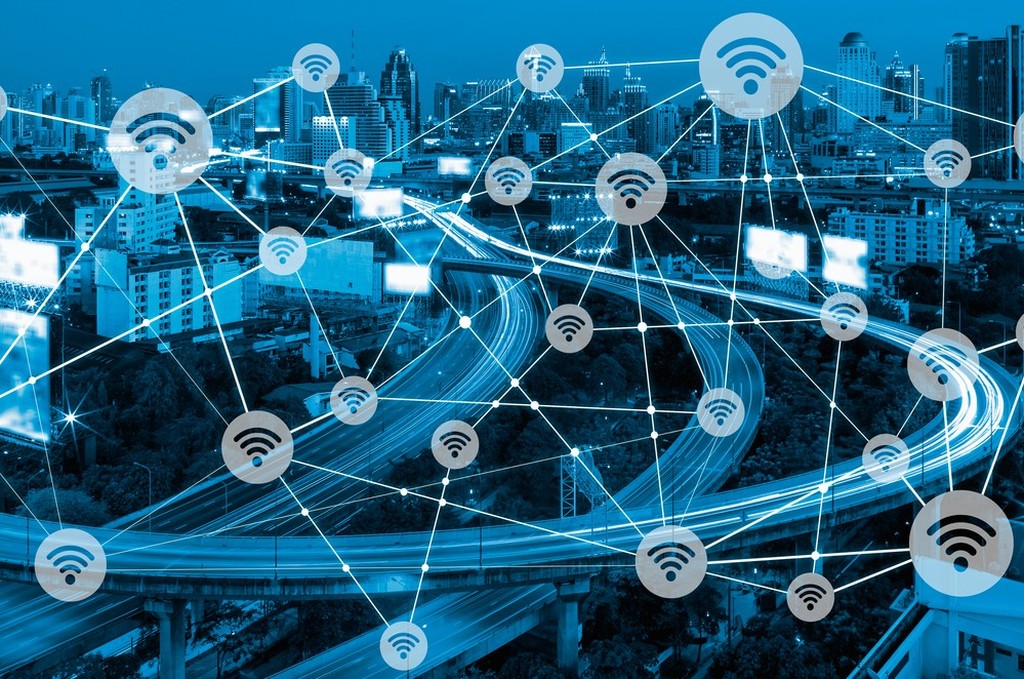
From Early Mobile Phones to the Connected World of Today
The story of wireless communication is one of the most remarkable technological journeys in human history.
Not long ago, mobile phones were used mainly for voice calls. The first generations of wireless networks focused on helping people communicate without being tied to fixed telephone lines. Sending a text message or making a call while traveling felt revolutionary at the time.
As technology improved, mobile networks evolved through multiple generations.
Second-generation networks made digital communication more practical. Third-generation networks introduced mobile internet access. Fourth-generation networks allowed faster browsing, video streaming, and smartphone applications.
Then came 5G.
Fifth-generation wireless technology significantly increased network speed, reduced delays, and improved the ability to connect large numbers of devices simultaneously. It created opportunities for cloud computing, smart factories, autonomous vehicles, and advanced Internet of Things systems.
Yet history shows that communication technology never stands still.
As society becomes increasingly digital, demands on wireless networks continue to grow. Artificial Intelligence systems process enormous amounts of data. Virtual and augmented reality applications require faster responses. Smart cities depend on millions of connected devices. Businesses increasingly rely on cloud-based services.
Researchers began asking an important question.
What comes after 5G?
The answer is leading toward a new generation of communication technology known as 6G.
Although 6G remains under development, many experts believe it could become one of the most transformative technologies of the coming decades.
The goal is not simply faster internet speeds.
Future wireless networks aim to create a world where digital and physical systems interact almost instantly. Communication may become so seamless that technology feels less like a separate tool and more like a natural extension of daily life.
Just as previous generations of wireless technology transformed communication, commerce, education, and entertainment, 6G could reshape how people interact with information, machines, and each other.
The next chapter of global connectivity is already beginning to take shape.
How 6G Could Be Different from Previous Wireless Networks
Whenever a new generation of wireless technology appears, many people assume it simply means faster downloads.
While speed is important, future wireless networks are expected to offer much more.
Researchers envision networks capable of transmitting enormous amounts of data with extremely low latency. Latency refers to the delay between sending information and receiving a response.
Even tiny delays can matter.
For activities such as remote surgery, autonomous transportation, industrial automation, and immersive virtual environments, communication must happen almost instantly.
Future 6G networks are expected to reduce these delays even further while supporting vastly greater network capacity.
One major area of research involves the use of higher-frequency radio waves. These frequencies may allow much larger amounts of information to be transmitted compared to current wireless systems.
Artificial Intelligence is also expected to play a central role.
Instead of relying solely on human operators to manage networks, future wireless systems may continuously optimize themselves. AI could automatically adjust network resources, improve efficiency, predict problems, and respond to changing conditions in real time.
Networks may become intelligent rather than simply connected.
Another important development involves sensing capabilities.
Researchers are exploring ways for wireless networks to function not only as communication systems but also as environmental sensing platforms. Future networks might help detect movement, monitor infrastructure, support navigation, and provide detailed awareness of physical environments.
Satellite integration is another area receiving significant attention.
Future wireless systems may combine terrestrial networks, satellites, drones, and airborne communication platforms into a single connected ecosystem. This could help provide reliable connectivity in remote regions where traditional infrastructure is difficult to build.
Cloud computing and edge computing will likely work closely with 6G networks.
Instead of processing all information in distant data centers, some computing tasks may occur closer to users, reducing delays and improving performance.
Security technologies are also expected to become more advanced as wireless systems handle increasingly sensitive information.
The vision extends far beyond smartphones. Future networks are being designed to support billions of connected devices, intelligent machines, robots, vehicles, sensors, and digital services operating simultaneously.
How Future Wireless Networks Could Transform Daily Life
The true significance of 6G may become apparent through the applications it enables.
One of the most discussed possibilities involves Extended Reality technologies.
Virtual Reality, Augmented Reality, and Mixed Reality require enormous amounts of data and extremely fast response times. Future wireless networks could support immersive digital experiences that feel far more natural and realistic than current systems.
People may attend virtual classrooms, business meetings, concerts, and social gatherings that closely resemble real-world interactions.
Healthcare could experience major improvements as well.
Doctors may perform highly precise remote procedures supported by ultra-reliable communication networks. Advanced medical devices could continuously monitor patients and transmit health information in real time.
Emergency healthcare services may become faster and more responsive through improved connectivity.
Education could become more interactive and accessible.
Students may participate in immersive learning experiences regardless of their physical location. Complex scientific concepts could be explored through realistic simulations and collaborative virtual environments.
Transportation systems are expected to benefit significantly.
Autonomous vehicles require constant communication with surrounding infrastructure, other vehicles, and cloud-based systems. Future wireless networks may provide the reliability and speed needed for large-scale deployment of intelligent transportation systems.
Smart cities could become even more connected.
Millions of sensors may continuously monitor traffic conditions, energy usage, air quality, water systems, public infrastructure, and emergency services. Real-time communication could help cities operate more efficiently and respond more quickly to changing conditions.
Industrial operations may undergo substantial transformation.
Factories increasingly depend on robotics, automation, and Artificial Intelligence. Future wireless networks could allow machines to coordinate more effectively while enabling flexible manufacturing systems capable of adapting to changing demands.
Agriculture may become more efficient through connected sensors, autonomous machinery, and precision farming techniques. Farmers could receive detailed information about soil conditions, weather patterns, irrigation needs, and crop health.
Entertainment industries may create entirely new experiences.
Streaming ultra-high-definition content, interactive virtual environments, cloud gaming, and immersive media applications may become more practical as network capabilities expand.
For many people, the biggest change may simply be that technology becomes more responsive, reliable, and integrated into everyday activities.
Much like electricity and internet access became essential parts of modern life, advanced wireless connectivity may become a fundamental infrastructure supporting countless services and innovations.
The Challenges, Opportunities, and Road to the 6G Era
Despite the excitement surrounding 6G, significant challenges remain before these networks become reality.
One of the biggest obstacles is infrastructure.
Building future wireless systems will require enormous investments in communication equipment, data centers, network architecture, satellites, and supporting technologies. Developing global infrastructure on this scale takes time, resources, and international cooperation.
Technical challenges are equally significant.
Higher-frequency signals often have shorter ranges and can be more easily blocked by buildings, weather conditions, and physical obstacles. Engineers must develop innovative solutions to ensure reliable coverage.
Energy consumption is another concern.
As networks become more powerful and support larger numbers of devices, improving energy efficiency becomes increasingly important. Future communication systems must balance performance with sustainability.
Cybersecurity will play a critical role as well.
Future networks may connect transportation systems, healthcare infrastructure, industrial facilities, financial services, and smart city operations. Protecting these systems from cyber threats will be essential.
Privacy concerns are expected to grow alongside increased connectivity.
As more devices collect and share information, governments, businesses, and technology providers will need strong policies to ensure responsible data management.
Global standards represent another important challenge.
Wireless technologies function best when countries and industries agree on common technical standards. Achieving international cooperation requires years of research, negotiation, and testing.
Despite these challenges, development continues to accelerate.
Universities, research institutions, governments, and technology companies are investing heavily in next-generation wireless technologies. Experimental systems are already being tested in laboratories around the world.
Many experts expect the first commercial forms of 6G to emerge during the 2030s, although exact timelines remain uncertain.
History suggests that every generation of wireless technology creates opportunities that are difficult to predict in advance. Few people imagined how smartphones, mobile applications, social media, ride-sharing services, and cloud computing would reshape society when earlier wireless networks were first introduced.
The same may be true for 6G.
Future wireless networks are not simply about faster internet connections. They represent an effort to build a communication foundation capable of supporting intelligent machines, immersive digital experiences, smart infrastructure, and emerging technologies that have yet to be fully imagined.
As the world becomes increasingly connected, 6G may serve as the backbone of a new digital era where information moves almost instantly, devices communicate seamlessly, and technology becomes more deeply integrated into everyday life than ever before. The journey toward that future has already begun, and its impact could be felt across nearly every aspect of society.