When Machines Started Learning Like Humans
A few years ago, most people thought of computers as machines that simply followed instructions. If you told a computer to add two numbers, it could do that. If you asked it to store a file, it could do that too. But computers could not think, learn, or create anything new on their own. Every action had to be carefully programmed by a human being.
Then something started to change.
Scientists and engineers began building systems that could learn from data instead of relying only on fixed instructions. Rather than telling a machine every single rule, they gave it thousands or even millions of examples and allowed it to find patterns on its own. This approach became known as Artificial Intelligence, or AI.
Imagine teaching a child to recognize a cat. You do not hand the child a list containing hundreds of rules about ear shape, fur texture, whisker length, and eye color. Instead, you show many pictures of cats. Over time, the child learns what a cat looks like.
Modern AI works in a similar way. Engineers feed it huge amounts of data. The system studies the information and learns patterns. After enough training, it can make predictions, recognize objects, understand language, and solve problems.
Today, AI is already part of daily life, even when people do not realize it. When a phone unlocks using a face scan, AI is working in the background. When a streaming service recommends a movie, AI is helping. When a navigation app finds the fastest route through traffic, AI is analyzing large amounts of information in real time.
Banks use AI to detect fraud. Hospitals use AI to help doctors identify diseases. Farmers use AI-powered tools to monitor crops and improve harvests. Airlines use AI to optimize routes and reduce fuel consumption.
The growth of AI has been so rapid because the world now produces enormous amounts of data. Every search, photo, video, transaction, and online interaction creates information. Combined with powerful processors and cloud computing, this data has given AI systems the ability to learn faster than ever before.
Many experts compare the rise of AI to the arrival of electricity or the internet. Those inventions changed almost every industry, and AI is beginning to do the same. Instead of being a single product, AI is becoming a technology that supports thousands of other technologies.
What makes AI especially important is that it improves over time. The more useful data it receives, the better it often becomes at performing specific tasks. This ability to learn and adapt is what separates modern AI from traditional software and explains why it is now becoming one of the most powerful technologies in human history.
The Rise of Generative AI and Creative Machines
For many years, AI was mainly used to analyze information and make predictions. It could recognize faces, recommend products, or detect unusual activity. But it usually did not create entirely new content.
That changed with the arrival of Generative AI.
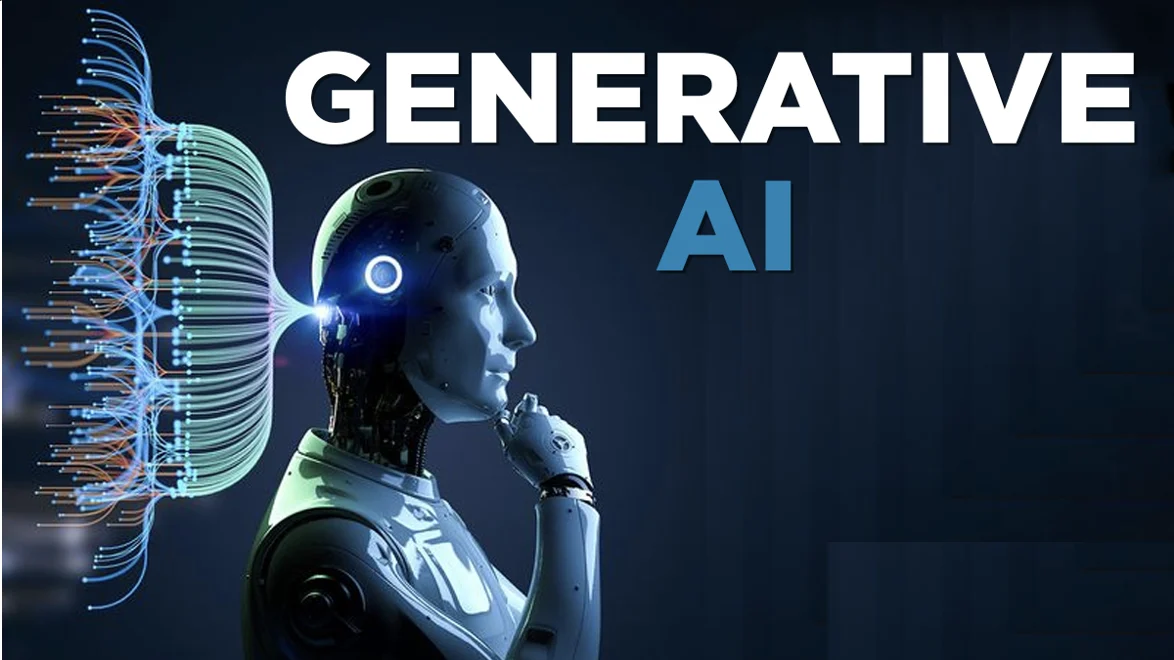
Generative AI is a type of artificial intelligence that can produce original content. It can write articles, create images, compose music, generate videos, design graphics, write software code, and even carry on conversations that feel surprisingly human.
Think about an artist who spends years studying paintings from different periods. After learning from thousands of examples, that artist develops the ability to create new artwork. Generative AI works in a similar way. It learns patterns from vast collections of text, images, audio, and videos. Once trained, it can generate new content that did not previously exist.
One of the reasons Generative AI has attracted so much attention is because it allows ordinary people to perform tasks that once required specialized skills.
A small business owner can create marketing content without hiring a large team. A student can receive explanations of difficult concepts. A programmer can speed up software development with AI-assisted coding tools. Designers can quickly generate visual ideas and concepts.
Writers often use Generative AI as a brainstorming partner. Instead of staring at a blank screen, they can generate outlines, ideas, and first drafts. Musicians can experiment with melodies. Architects can visualize building concepts. Teachers can create lesson plans and educational materials more efficiently.
The technology is becoming increasingly sophisticated. Early systems often produced content that felt robotic or unnatural. Modern systems can generate text that reads smoothly and images that appear highly realistic.
Yet Generative AI is not magic.
It does not truly understand the world in the same way humans do. Instead, it predicts what should come next based on patterns it learned during training. Sometimes those predictions are remarkably accurate. Other times they can be incorrect, misleading, or completely invented.
Because of this, human oversight remains essential. AI-generated content often benefits from review, editing, and fact-checking. The best results usually come when humans and AI work together rather than when AI works alone.
Many companies are now building products around Generative AI. Search engines, office software, customer support platforms, educational applications, and creative tools increasingly include AI-powered features. As costs continue to fall and capabilities improve, Generative AI is likely to become as common as word processors and web browsers.
The shift is creating new opportunities while also changing expectations about how work gets done. Tasks that once took hours can now be completed in minutes, allowing people to focus more on creativity, decision-making, and problem-solving.
How AI Is Changing Jobs, Education, and Everyday Life
Every major technological revolution changes the way people work. The steam engine transformed manufacturing. Electricity transformed industry and households. The internet transformed communication and business. AI is now beginning to reshape nearly every profession.
In offices around the world, employees use AI to draft documents, analyze spreadsheets, summarize meetings, and organize information. Customer service teams use AI chat systems to answer routine questions. Marketing teams use AI to create content ideas and campaign strategies.
Software development is also changing rapidly. Programmers increasingly work alongside AI coding assistants that suggest solutions, identify errors, and generate sections of code. Instead of replacing programmers, these tools often help them work faster and focus on more complex challenges.
Healthcare is another field experiencing major changes. AI systems can analyze medical images, identify patterns that may indicate disease, and assist doctors in making decisions. Researchers use AI to accelerate drug discovery and study complex biological processes.
In education, AI is creating opportunities for more personalized learning. Traditional classrooms often teach many students in the same way. AI-powered systems can adapt lessons to individual learning styles and progress levels.
A student struggling with mathematics may receive additional explanations and practice exercises. Another student who learns quickly may move ahead without waiting for the rest of the class. This flexibility has the potential to make education more effective and accessible.
Daily life is changing as well.
Smart assistants answer questions and control household devices. Translation tools help people communicate across languages. Navigation systems guide drivers through unfamiliar cities. Online stores recommend products based on preferences and previous purchases.
Even entertainment is being transformed. Streaming platforms use AI to recommend movies and music. Video game developers use AI to create more realistic characters and dynamic environments. Content creators use AI tools to edit videos, generate graphics, and streamline production.
At the same time, many workers wonder whether AI will take their jobs.
The reality is more complicated than a simple yes or no answer. Some repetitive tasks may become automated. Certain roles may change significantly. New professions will also emerge.
History shows that technological change often eliminates some jobs while creating others. The internet reduced demand for some traditional roles but created entirely new industries involving digital marketing, app development, cybersecurity, and online commerce.
AI is likely to follow a similar pattern. People who learn to work effectively with AI tools may find new opportunities. Skills such as creativity, leadership, communication, critical thinking, and emotional intelligence are expected to remain highly valuable because they are difficult for machines to replicate.
Rather than replacing all human work, AI is more likely to transform how work is performed.
The Opportunities, Risks, and Future Ahead
As AI becomes more powerful, society faces important questions about how the technology should be developed and used.
One major concern involves misinformation. Generative AI can create realistic text, images, audio recordings, and videos. While this can be useful for legitimate purposes, it can also be misused to spread false information or deceive people.
Privacy is another challenge. AI systems often rely on large amounts of data. Governments, businesses, and technology companies must decide how information is collected, stored, and protected.
Bias is also an important issue. AI systems learn from data created by humans. If that data contains unfair patterns or historical biases, AI may sometimes reflect those problems. Researchers are working to make systems more transparent, accurate, and fair.
Security concerns continue to grow as well. Criminals may attempt to use AI for cyberattacks, scams, and fraud. At the same time, security experts are using AI to detect threats and defend systems more effectively.
The debate about regulation is becoming increasingly important. Governments around the world are exploring rules that encourage innovation while protecting citizens. Finding the right balance will likely be one of the major technology challenges of the coming decade.
Despite these concerns, the potential benefits remain enormous.
Scientists are using AI to study climate change, discover new materials, and explore complex scientific questions. Medical researchers hope AI will help identify treatments for diseases that have challenged humanity for decades. Engineers are using AI to design smarter transportation systems and more efficient energy networks.
Looking further ahead, AI may become deeply integrated into everyday life. Personal AI assistants could manage schedules, handle routine tasks, provide customized education, and offer professional support across many fields. Businesses may operate with far greater efficiency. Healthcare could become more predictive and personalized.
The relationship between humans and AI will likely continue evolving. The most successful future may not involve humans competing against machines. Instead, it may involve humans using intelligent tools to extend their abilities and solve problems that were once impossible to tackle.
Artificial Intelligence and Generative AI are still developing technologies. Their full impact has not yet been seen. What is already clear is that they are changing how people learn, work, create, communicate, and innovate. The choices made today about how these systems are built and used will influence the direction of society for many years to come.