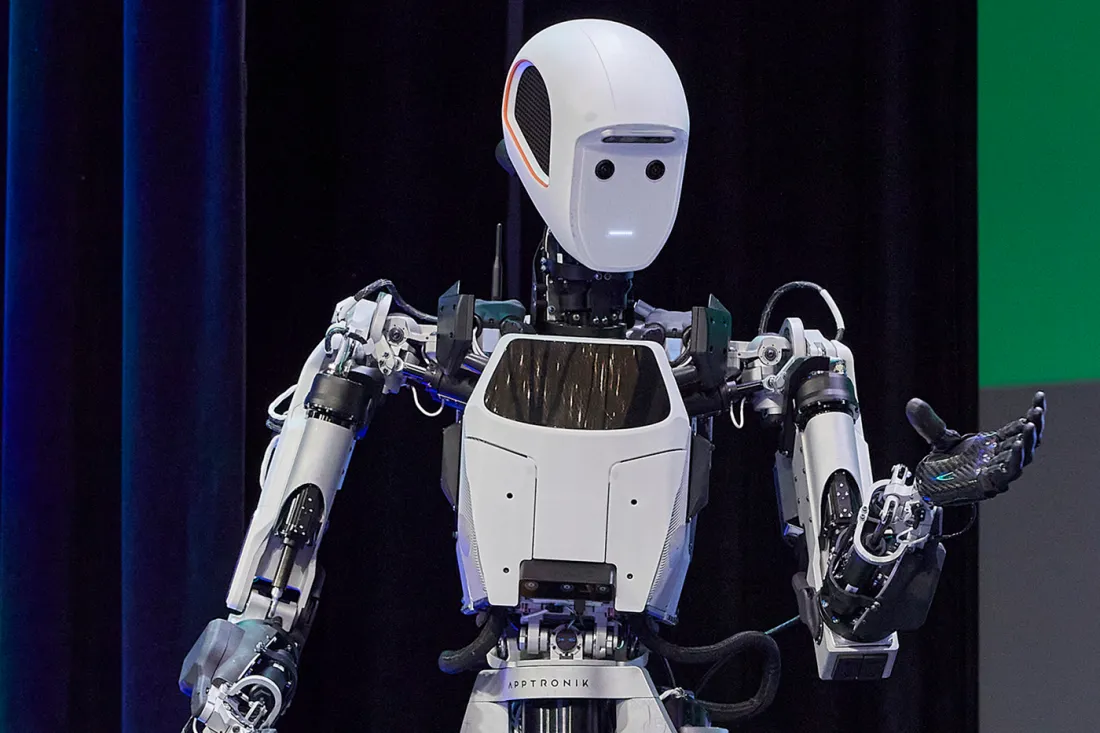
From Science Fiction Dreams to Real Machines
For generations, people imagined a future where robots would walk, talk, and work alongside humans. Old science fiction books and movies often showed intelligent machines helping with daily tasks, working in factories, exploring distant planets, and sometimes even becoming friends with people.
For a long time, these ideas seemed far away from reality.
The robots that existed in the past were usually large industrial machines fixed to factory floors. They could weld metal, assemble car parts, and perform repetitive tasks with great precision. However, they could not move around freely, understand conversations, or adapt to changing situations.
If a box was moved slightly from its usual position, many early robots would simply fail because they were programmed to expect everything to remain exactly the same.
Human beings, on the other hand, are remarkably adaptable. A person can walk across uneven ground, pick up different objects, open doors, climb stairs, and adjust to new situations almost instantly.
Engineers began asking an important question. Instead of designing machines that only work in specially designed environments, why not create robots that can operate in the same spaces built for humans?
This idea gave rise to humanoid robots.
A humanoid robot is a machine designed to resemble the human body in some way. Most have a head, torso, two arms, and two legs. They are built to move through environments designed for people, allowing them to use tools, open doors, carry objects, and perform many everyday activities.
Building such machines turned out to be far more difficult than many people expected.
Walking alone is an incredibly complex task. Humans perform it naturally without thinking, but maintaining balance requires constant adjustments involving muscles, joints, vision, and the brain. Teaching a machine to do the same required decades of research.
As computers became more powerful and Artificial Intelligence improved, humanoid robots gradually became more capable. Today, robots can walk, run, carry boxes, climb stairs, and perform tasks that once seemed impossible for machines.
What was once considered science fiction is slowly becoming reality.
How Humanoid Robots Learn to Move and Work
When people watch a humanoid robot walking across a room, the movement may appear simple. Behind the scenes, however, thousands of calculations are taking place every second.
Modern humanoid robots rely on a combination of sensors, cameras, artificial intelligence, motors, and software systems. Together, these components allow the robot to understand its surroundings and react appropriately.
The cameras serve as the robot’s eyes. They help identify people, objects, walls, furniture, and obstacles. Sensors throughout the body provide information about balance, movement, pressure, and position.
The robot’s computer acts like a brain, processing all of this information in real time.
Imagine a robot entering a warehouse. It must identify a box, estimate its weight, calculate the safest path, maintain balance while carrying the load, avoid obstacles, and place the box in the correct location. Humans perform these actions naturally, but for a robot, each step requires advanced software and continuous decision-making.
Artificial Intelligence plays a major role in this process.
Rather than relying entirely on pre-programmed instructions, modern robots can learn from experience. They can analyze thousands of examples, recognize patterns, and improve their performance over time.
Some robots are trained using simulations before they ever enter the real world. Engineers create virtual environments where robots practice walking, lifting objects, and solving problems millions of times. This allows them to learn quickly without risking damage to expensive hardware.
Battery technology has also become a critical part of humanoid robot development. Early robots often required external power sources and could operate for only short periods. Modern batteries provide greater mobility and longer operating times, making robots more practical for real-world tasks.
The mechanical design of these machines continues to improve as well. Engineers are developing lighter materials, stronger joints, and more efficient motors. As a result, robots are becoming faster, more stable, and more energy efficient.
Some of the newest humanoid robots can perform surprisingly human-like actions. They can sort packages, fold clothing, carry equipment, serve customers, and even engage in basic conversations.
Although they still have limitations, their capabilities are improving year after year. Many experts believe the next decade will bring even greater advances as AI and robotics continue to evolve together.
How Humanoid Robots Could Change Everyday Life
Most people associate robots with factories, but the future of humanoid robots extends far beyond manufacturing.
One of the biggest reasons companies are investing heavily in robotics is the growing shortage of workers in many industries. Around the world, businesses are struggling to fill positions involving repetitive, physically demanding, or potentially dangerous tasks.
Humanoid robots could help address these challenges.
In warehouses, robots may move goods, organize inventory, and assist with shipping operations. In factories, they could handle repetitive assembly work while human workers focus on supervision and quality control.
Hospitals may become another important area for humanoid robots.
Healthcare workers often spend significant time transporting supplies, delivering equipment, moving patients, and performing routine support tasks. Robots could assist with these activities, allowing nurses and doctors to devote more attention to patient care.
Elder care is another area attracting considerable interest.
Many countries have aging populations and increasing demand for caregivers. Humanoid robots could help elderly individuals with daily tasks such as carrying items, reminding them to take medication, monitoring safety, and providing assistance around the home.
Schools and educational institutions may also find uses for robots. They could support teachers, assist students with special needs, and provide personalized learning experiences.
Hotels, airports, shopping centers, and office buildings are experimenting with service robots as well. These machines can greet visitors, provide directions, answer questions, and perform routine maintenance tasks.
In dangerous environments, humanoid robots may prove especially valuable.
Natural disasters, nuclear facilities, mines, and hazardous industrial sites often expose workers to significant risks. Robots can enter these environments without concern for injury, helping protect human lives.
Space exploration presents another exciting possibility.
Future missions to the Moon or Mars may use humanoid robots to build structures, transport equipment, and perform maintenance before human astronauts arrive. Since many tools and workspaces are designed for human hands and bodies, humanoid robots could be particularly useful in these situations.
As costs decline and technology improves, robots may eventually become common in homes. Much like personal computers and smartphones became part of daily life, humanoid robots could one day assist with household chores, maintenance, and routine activities.
The Challenges, Opportunities, and Future Ahead
Despite impressive progress, humanoid robots still face significant challenges.
One of the biggest obstacles is cost.
Building a machine that can move like a human, process information in real time, and operate safely around people requires sophisticated hardware and software. Many advanced humanoid robots remain expensive, limiting widespread adoption.
Battery life is another challenge. Humans can work for many hours with breaks, while robots often require recharging after shorter periods. Improving energy efficiency remains a major focus for researchers.
Safety is equally important.
Humanoid robots are powerful machines that may operate near people. Engineers must ensure they can detect obstacles, avoid accidents, and respond safely to unexpected situations. A robot carrying a heavy object must never lose control in a crowded environment.
Questions about employment also continue to generate debate.
Some people worry that robots will replace human workers. Others believe robots will mainly take over repetitive and physically demanding tasks while creating new opportunities in engineering, maintenance, programming, and robot management.
History suggests that technological change often reshapes jobs rather than simply eliminating them. New industries emerge, old roles evolve, and workers adapt to changing demands.
Ethical considerations are becoming increasingly important as robots become more intelligent and capable. Society will need to decide how these machines should interact with people, what responsibilities they should have, and what limits should be placed on their use.
The coming years are likely to bring rapid progress.
Artificial Intelligence is making robots smarter. Better batteries are increasing operating times. Advanced materials are reducing weight while improving strength. Manufacturing improvements are gradually lowering costs.
Many experts believe humanoid robots could eventually become as common as automobiles, computers, or smartphones. Businesses may employ fleets of robots to perform routine work. Hospitals may rely on robotic assistants. Homes may include machines that help with daily chores and caregiving.
The vision that once existed only in science fiction is steadily moving closer to reality. Humanoid robots are no longer simply experimental machines in research laboratories. They are becoming practical tools capable of working alongside people in factories, hospitals, warehouses, offices, and homes.
As these machines continue to improve, they may transform how societies work, care for aging populations, respond to labor shortages, and explore new frontiers. The story of humanoid robots is still being written, but it is already becoming one of the most fascinating chapters in the future of technology.