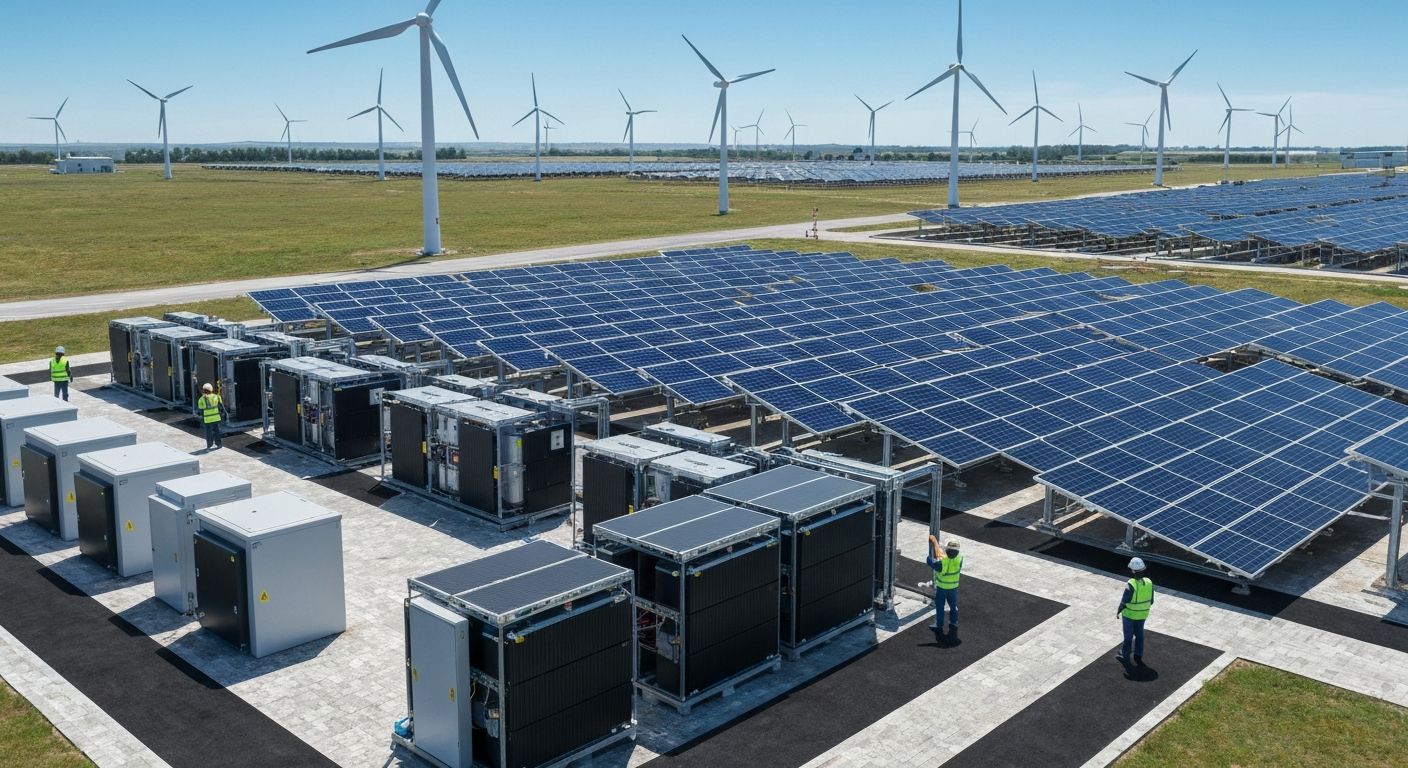
The Search for Cleaner and Smarter Sources of Energy
For thousands of years, human civilization has depended on energy to grow and prosper. Ancient societies relied on human labor, animal power, wood, and simple water wheels. As technology advanced, coal became the fuel that powered the Industrial Revolution. Later, oil and natural gas transformed transportation, manufacturing, and modern life.
These energy sources helped build the world we know today.
Cities expanded, industries flourished, transportation networks connected continents, and technological progress accelerated at an extraordinary pace.
Yet the success of fossil fuels came with challenges.
Coal, oil, and natural gas are limited resources that take millions of years to form. Burning them releases carbon dioxide and other greenhouse gases into the atmosphere. Over time, scientists began studying how these emissions affect air quality, ecosystems, and global climate patterns.
At the same time, growing populations increased the demand for energy. More homes, vehicles, factories, data centers, and electronic devices meant that societies needed larger and more reliable energy supplies.
Researchers, governments, and businesses started looking for alternatives.
Instead of depending entirely on fuels extracted from the ground, they explored ways to capture energy that already exists naturally around us.
The sun shines every day. Wind moves continuously across oceans, mountains, and plains. Rivers flow toward the sea. Ocean tides rise and fall with remarkable predictability.
These natural processes contain enormous amounts of energy.
The technologies developed to capture this energy became known as renewable energy systems because they rely on resources that are constantly replenished by nature.
Unlike fossil fuels, renewable energy sources are not consumed permanently when used. Sunlight continues to arrive, winds continue to blow, and rivers continue to flow.
Over the past few decades, renewable energy has evolved from a niche technology into one of the fastest-growing sectors in the global economy.
Solar panels now appear on homes, businesses, and large solar farms. Wind turbines have become common sights in many regions. Entire countries are increasing their reliance on renewable energy as part of long-term sustainability strategies.
Yet one major challenge remained.
Nature does not always provide energy exactly when people need it.
The sun does not shine at night. Wind speeds vary from day to day. Electricity demand changes throughout the day and across seasons.
This challenge led to another important technological revolution: advanced battery storage.
Together, renewable energy and modern battery technology are creating a new foundation for the future of global energy systems.
How Renewable Energy and Modern Batteries Work Together
Renewable energy technologies may seem simple on the surface, but they rely on decades of scientific research and engineering innovation.
Solar energy is perhaps the most familiar example.
Solar panels contain materials that convert sunlight directly into electricity. When sunlight strikes these materials, it causes electrons to move, generating electrical current that can power homes, businesses, and industrial facilities.
Wind energy works differently.
Large turbines use rotating blades to capture the kinetic energy of moving air. As the blades spin, they drive generators that produce electricity. Modern wind farms can generate substantial amounts of power for entire communities.
Hydropower uses flowing water to turn turbines and create electricity. Many countries have relied on hydroelectric dams for decades because they provide stable and reliable energy generation.
Other renewable technologies include geothermal systems that use heat from beneath the Earth’s surface and tidal systems that capture energy from ocean movements.
Each of these technologies offers important benefits, but they share a common challenge.
Energy production does not always match energy demand.
Imagine a sunny afternoon when solar panels generate more electricity than a neighborhood needs. Without storage, much of that excess energy may go unused.
Now imagine the same neighborhood after sunset when electricity demand remains high but solar generation drops to zero.
This is where battery storage becomes essential.
Modern batteries act like energy reservoirs. They store excess electricity when production exceeds demand and release it later when additional power is needed.
The concept may sound straightforward, but developing advanced batteries has required tremendous innovation.
Early batteries often suffered from limited capacity, short lifespans, slow charging speeds, and high costs. Researchers worked for decades to improve performance while reducing costs.
Today’s advanced batteries are far more capable.
Electric vehicles, renewable energy systems, smartphones, laptops, and countless other technologies depend on modern battery designs. Improvements in energy density allow batteries to store more electricity in smaller spaces. Faster charging technologies increase convenience. Longer lifespans improve economic value.
Large-scale battery storage systems are now being installed alongside solar and wind farms around the world.
Some facilities are capable of storing enough electricity to power entire towns during periods of high demand or low renewable generation.
The combination of renewable energy and advanced battery storage is gradually transforming electricity grids from systems dependent on continuous fuel consumption into systems capable of storing and managing clean energy more efficiently.
How These Technologies Could Transform Society
The impact of renewable energy and battery storage extends far beyond electricity generation.
One of the most visible changes is occurring in transportation.
Electric vehicles are becoming increasingly popular as battery technology improves. Modern electric cars can travel longer distances, charge faster, and operate more efficiently than earlier generations.
As battery costs continue to decline, electric transportation may become accessible to a larger portion of the population.
Public transportation systems are also evolving. Electric buses, trains, delivery vehicles, and commercial fleets are helping reduce emissions while lowering long-term operating costs.
Homes and businesses are changing as well.
Many property owners now install rooftop solar systems that generate electricity during the day. When combined with battery storage, these systems can provide power even during grid outages or periods of peak demand.
Remote communities may benefit significantly from these technologies.
In areas where traditional electrical infrastructure is expensive or difficult to build, renewable energy combined with battery storage can provide reliable electricity without requiring large fossil fuel power plants.
Agriculture is another sector experiencing change.
Farmers increasingly use solar-powered irrigation systems, battery-powered equipment, and renewable energy installations to reduce operating expenses and improve sustainability.
Industrial facilities are exploring renewable energy to stabilize energy costs and reduce environmental impacts. Data centers, manufacturing plants, and logistics operations are investing heavily in clean energy projects.
National energy security may improve as well.
Countries that rely heavily on imported fossil fuels often face economic and geopolitical risks. Expanding domestic renewable energy production can reduce dependence on external energy supplies.
Environmental benefits are another major factor.
Reducing reliance on fossil fuels can help improve air quality, decrease greenhouse gas emissions, and support efforts to address climate-related challenges.
The economic opportunities are substantial too.
Renewable energy projects create jobs in manufacturing, installation, maintenance, engineering, research, and infrastructure development. Entire industries are emerging around clean energy technologies and energy storage systems.
As innovation continues, renewable energy and battery storage are becoming not just environmental solutions but major drivers of economic growth and technological progress.
The Challenges, Innovations, and Future of Global Energy
Despite remarkable progress, significant challenges remain.
One of the biggest concerns involves energy storage capacity.
Although battery technology has improved dramatically, researchers continue searching for ways to store larger amounts of electricity more efficiently and at lower costs. Long-duration energy storage remains a major focus of global research efforts.
Raw materials present another challenge.
Many batteries require minerals such as lithium, nickel, cobalt, and graphite. Expanding production while maintaining responsible environmental and social practices is an important issue for the industry.
Battery recycling is becoming increasingly important as well.
As millions of batteries reach the end of their useful lives, developing effective recycling systems will help recover valuable materials and reduce waste.
Electricity grids must also adapt.
Traditional power systems were designed around large centralized power plants that generated electricity continuously. Renewable energy introduces new patterns of production that require smarter and more flexible grid management.
Engineers are developing advanced software, smart grids, and improved infrastructure to address these challenges.
Weather dependency remains another consideration.
Solar and wind generation vary according to environmental conditions. Expanding storage capacity, improving forecasting systems, and diversifying renewable energy sources can help maintain reliability.
Despite these obstacles, innovation continues at an impressive pace.
Researchers are developing next-generation batteries with higher energy density, faster charging capabilities, and improved safety. Solid-state batteries, sodium-ion batteries, and other emerging technologies may further improve energy storage in the coming years.
Scientists are also exploring entirely new approaches, including hydrogen storage systems, advanced thermal storage technologies, and innovative grid-scale energy solutions.
Many experts believe the coming decades will witness one of the largest transformations in energy history.
Just as coal powered the Industrial Revolution and oil fueled the twentieth century, renewable energy and advanced battery storage may define the energy systems of the twenty-first century.
Future cities could operate on clean electricity generated by solar panels, wind farms, and other renewable sources. Homes may store their own energy. Electric vehicles may serve as mobile power sources. Smart grids may automatically balance energy production and consumption across entire regions.
The transition will not happen overnight, but it is already underway.
Renewable energy and advanced battery storage are more than technological innovations. They represent a new approach to producing, storing, and using power. As these technologies continue to improve, they have the potential to reshape economies, strengthen energy security, support environmental goals, and provide cleaner, more reliable electricity for generations to come.