Why Traditional Computers Have Limits
Most people use computers every day without thinking about how they work. Whether it is a smartphone, laptop, gaming console, or cloud server, nearly every modern device follows the same basic principles of computing.
At the heart of every traditional computer are tiny electronic switches called transistors. These switches process information using bits. A bit can exist in one of two states: 0 or 1.
Everything a computer does, from displaying photos and playing videos to running complex software, is built from enormous combinations of these zeros and ones.
For decades, engineers made computers faster by shrinking transistors and fitting more of them onto computer chips. This approach led to remarkable progress. Computers that once filled entire rooms can now fit into a pocket.
Yet despite these advances, traditional computers still face limitations.
Some problems are so complex that even the world’s most powerful supercomputers would need years, centuries, or even longer to solve them.
Imagine trying to find the best route among millions of possible paths, simulate every interaction inside a complex molecule, or break highly advanced encryption systems. These tasks often require immense computing power because the number of possible combinations grows rapidly.
As problems become more complicated, traditional computers must examine enormous numbers of possibilities one step at a time. Even with modern hardware, this process can become incredibly slow.
Scientists began wondering whether there might be a completely different way to perform calculations.
The search for an answer led researchers into the strange and fascinating world of quantum physics.
Quantum physics studies the behavior of particles at incredibly small scales, far smaller than anything visible to the human eye. At this level, nature behaves in ways that seem unusual and sometimes even impossible according to everyday experience.
Researchers realized that some of these unusual quantum properties might be used to create a new kind of computer.
Instead of simply making traditional computers faster, they proposed building machines that operate according to the laws of quantum mechanics itself.
This idea eventually became known as quantum computing.
What began as a theoretical concept discussed in scientific laboratories has grown into one of the most ambitious technological projects of the modern era.
How Quantum Computers Think Differently
To understand quantum computing, it helps to first remember how traditional computers work.
A conventional computer stores information using bits that can be either 0 or 1. Every calculation is ultimately built upon these binary choices.
Quantum computers use something different called quantum bits, or qubits.
A qubit can represent 0, 1, or a combination of both states at the same time. This unusual property comes from a quantum phenomenon known as superposition.
The concept sounds strange because it does not match our everyday experience.
Imagine a coin lying on a table. It is either heads or tails. A traditional computer bit behaves in a similar way.
Now imagine spinning the coin rapidly. While it spins, it seems to represent both possibilities at once until it lands. Although this is not a perfect comparison, it provides a rough idea of how a qubit differs from a traditional bit.
Another important quantum property is called entanglement.
When qubits become entangled, they can influence one another in ways that appear remarkable. Changes affecting one qubit may be connected to another, even when separated by distance.
Scientists use these unique properties to perform calculations in fundamentally different ways from conventional computers.
Instead of checking possibilities one after another, quantum computers can explore many possibilities simultaneously. This capability allows them to tackle certain types of problems far more efficiently than traditional machines.
However, quantum computing is not simply a faster version of existing computing.
A quantum computer will not necessarily make web browsing faster or improve everyday word processing. Instead, it is designed for specific categories of extremely difficult problems where quantum methods offer advantages.
Building a practical quantum computer is extraordinarily challenging.
Quantum states are fragile and can be disrupted by tiny environmental changes such as heat, vibration, electromagnetic interference, or even slight imperfections in equipment.
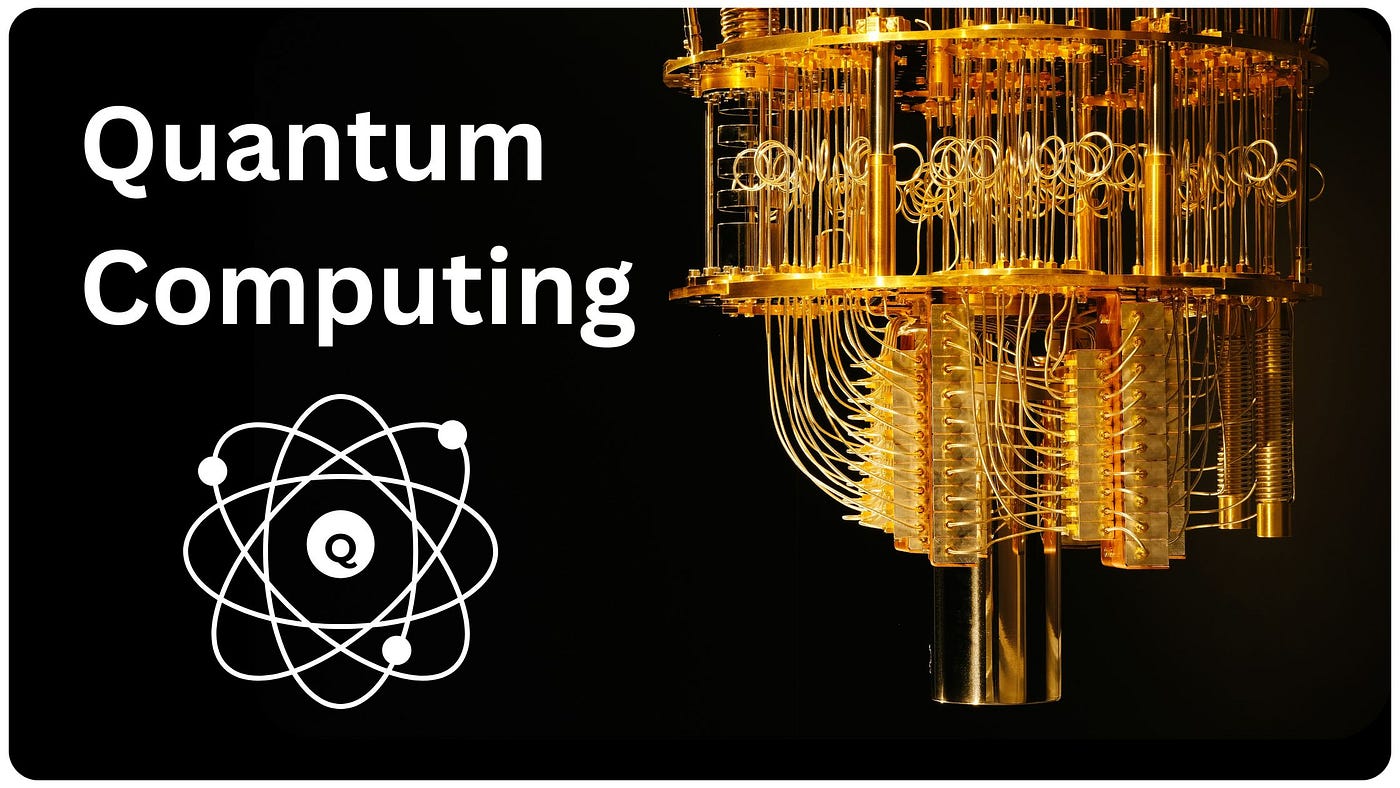
To protect qubits, many quantum computers operate at temperatures colder than outer space. Some systems require complex cooling equipment that keeps components near absolute zero.
Engineers and physicists spend years developing techniques to reduce errors and stabilize quantum systems. Despite the difficulties, steady progress continues to be made.
Each new breakthrough brings researchers closer to unlocking the full potential of quantum computing.
The Industries Quantum Computing Could Transform
The excitement surrounding quantum computing comes from its potential to solve problems that are currently beyond the reach of conventional computers.
One of the most promising areas is medicine.
Developing new drugs often requires scientists to understand how molecules interact at an atomic level. These interactions can be incredibly complex, making simulations difficult for traditional computers.
Quantum computers may eventually model molecular behavior with much greater accuracy. This could help researchers discover new medicines, develop treatments faster, and reduce the cost of pharmaceutical research.
Chemistry and materials science could experience similar benefits.
Scientists constantly search for stronger materials, more efficient batteries, improved solar panels, and advanced manufacturing techniques. Quantum simulations may help identify new materials with desirable properties before they are physically created.
The energy sector could also benefit.
Researchers are exploring ways to use quantum computing to improve energy storage, optimize electrical grids, and accelerate research into clean energy technologies.
Financial institutions are paying close attention as well.
Banks and investment firms deal with highly complex optimization problems involving risk management, portfolio analysis, fraud detection, and market forecasting. Quantum algorithms may eventually process these challenges more efficiently than conventional systems.
Transportation and logistics represent another major opportunity.
Large delivery networks involve countless variables including routes, fuel usage, schedules, weather conditions, and traffic patterns. Quantum computing could help identify highly efficient solutions that save time and resources.
Artificial Intelligence may also gain advantages.
Training advanced AI models often requires enormous computational resources. Researchers are investigating whether quantum techniques could accelerate certain machine learning tasks and improve data analysis.
Climate research is another area where quantum computing could play an important role.
Scientists use complex models to study weather systems, ocean currents, atmospheric behavior, and environmental changes. More powerful simulations may improve understanding of climate patterns and support better decision-making.
Space exploration could benefit as well.
Planning missions, analyzing scientific data, and solving engineering challenges often require intensive computation. Quantum systems may eventually assist researchers working on future space technologies.
Although many of these applications remain under development, the potential impact is enormous. Industries that depend on solving extremely complex problems may someday rely heavily on quantum computing.
The Challenges, Risks, and Future of Quantum Computing
Despite the excitement, quantum computing remains one of the most difficult technologies ever attempted.
Building stable quantum computers is not easy.
Qubits are highly sensitive and prone to errors. Even small disturbances from the surrounding environment can interfere with calculations. Engineers must constantly develop new methods to improve reliability and accuracy.
Error correction is one of the biggest challenges facing the industry today.
Unlike traditional computers, where errors are relatively easy to detect and fix, quantum systems require sophisticated techniques to maintain stable operations. Researchers continue working to create fault-tolerant quantum computers capable of handling large-scale computations.
The cost of development is another obstacle.
Quantum research requires specialized equipment, advanced laboratories, highly trained scientists, and significant investment. As a result, only a limited number of organizations currently have the resources to build and operate advanced quantum systems.
Security is also becoming an important topic.
Many modern encryption methods protect online banking, communications, government systems, and sensitive information. Some experts believe future quantum computers may eventually be powerful enough to break certain forms of encryption that are widely used today.
Because of this possibility, researchers are developing new forms of quantum-resistant cryptography designed to protect data against future quantum attacks.
There is also the challenge of managing expectations.
Quantum computing is often portrayed as a technology that will instantly revolutionize every aspect of society. The reality is more complex. Progress is occurring steadily, but practical large-scale quantum computers capable of solving many real-world problems are still being developed.
The journey may take years or even decades.
Even so, momentum continues to grow.
Governments, universities, technology companies, and research organizations around the world are investing billions of dollars into quantum research. New discoveries are being made regularly, and each breakthrough helps move the field forward.
Many experts compare today’s quantum computers to the earliest electronic computers of the mid-twentieth century. Those early machines were large, expensive, and limited in capability, yet they eventually evolved into the powerful devices that now shape modern life.
Quantum computing may follow a similar path.
The technology is still in its early stages, but its long-term potential is extraordinary. If researchers succeed in overcoming current challenges, quantum computers could help solve problems that have remained beyond human reach for generations.
From discovering life-saving medicines and designing advanced materials to improving artificial intelligence and transforming scientific research, quantum computing has the potential to become one of the most important technological breakthroughs of the twenty-first century. The journey is only beginning, but the possibilities are unlike anything the computing world has seen before.